
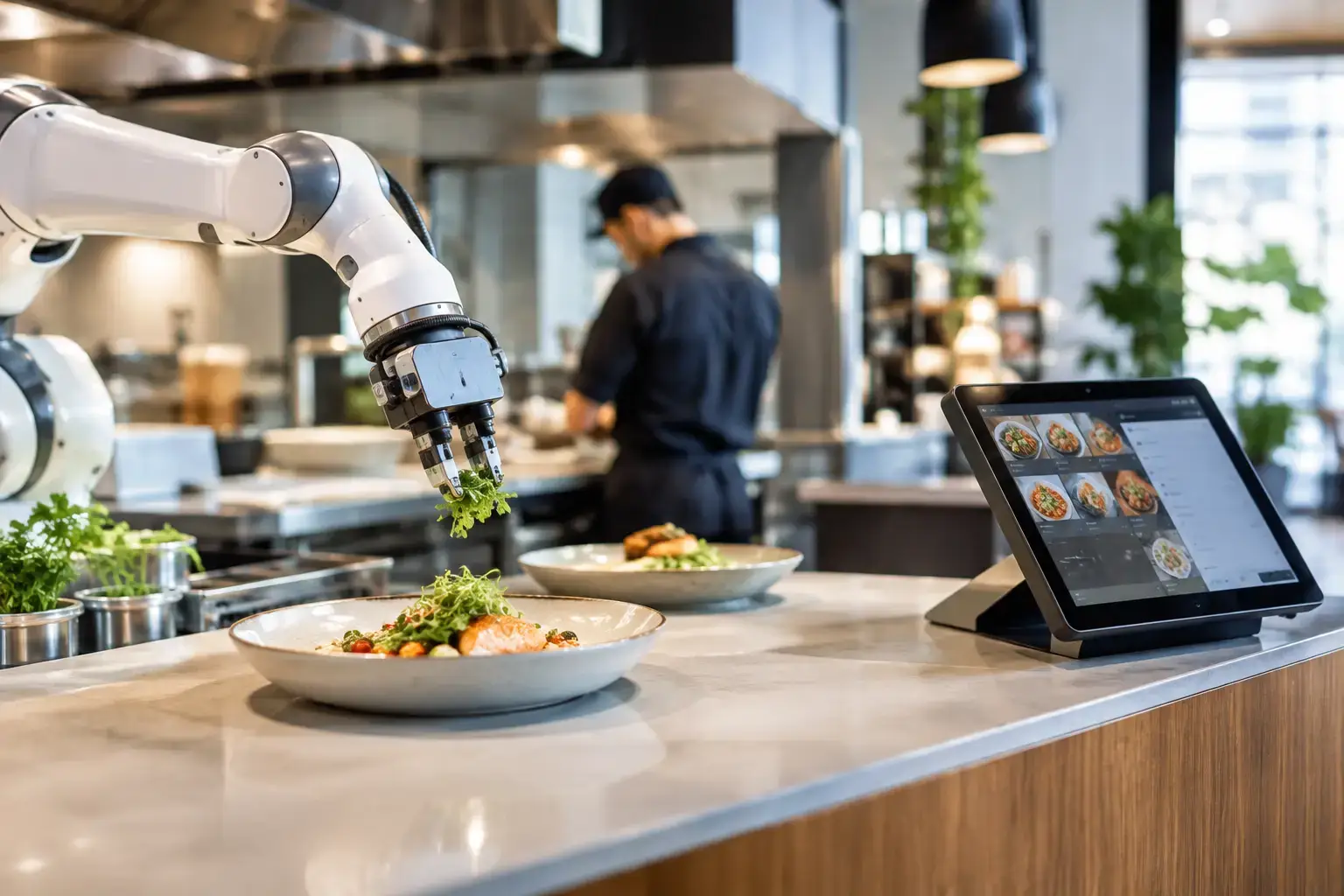
A rushed Friday service rarely fails because a team lacks effort. It fails when cooks hunt for prep containers, a server rekeys an order, a refrigerator runs too warm unnoticed, or the dishwasher becomes the evening’s bottleneck. Restaurant automation trends are gaining traction because they address those repeatable friction points without asking operators to lower standards for food, speed, or hospitality.
For restaurants, cafés, bakeries, bars, and caterers, automation is not one purchase or a room full of robots. It is a practical mix of connected equipment, digital controls, and repeatable workflows. The right investment reduces avoidable labor, protects product quality, and gives skilled people more time for the work guests actually notice.
Restaurant Automation Trends Moving Into Daily Operations
The most useful automation is often the least theatrical. A programmable combi oven, a temperature-monitoring system, or a portioning machine may not attract attention from the dining room, but each can improve consistency across hundreds of covers.
Smart cooking equipment is standardizing execution
Connected ovens, fryers, grills, proofers, and holding cabinets are becoming more common in operations that need the same result across shifts. Programmable recipes can set cook times, temperatures, humidity, fan speed, and holding parameters. This gives an experienced chef a way to transfer standards to a new cook without relying entirely on memory or handwritten notes.
This is especially valuable for high-volume prep and multi-unit concepts. A combi oven can handle roasting, steaming, baking, and regeneration with preset programs, while automated oil filtration can help maintain frying quality and extend the usable life of cooking oil. For bakeries and dessert operations, controlled proofing, baking programs, and batch equipment make output more predictable when demand rises.
The trade-off is that programming does not replace culinary judgment. Recipes still need testing with your actual ingredients, pan sizes, loading patterns, and local utility conditions. Automation delivers its best results after the team has defined what “correct” looks like.
Digital ordering is reducing avoidable handoffs
Kitchen display systems, handheld point-of-sale devices, online ordering integrations, and self-service kiosks all reduce the number of times an order must be spoken, written, or entered manually. Fewer handoffs can mean fewer modifier errors, faster ticket routing, and clearer communication between front of house, bar, and kitchen.
A quick-service operation may benefit most from kiosks and pickup screens. A full-service restaurant may get more value from handheld devices that let servers send courses, allergies, and seat positions directly to the kitchen. The goal is not to remove staff from the guest experience. It is to keep staff from spending prime service time standing at a terminal or translating handwritten tickets.
Not every guest wants to order from a screen. Restaurants with a hospitality-led service model should retain a clear human option and use digital ordering where it removes inconvenience rather than creating it.
Food safety automation is becoming an operational safeguard
Manual temperature logs are easy to postpone during a busy shift and easy to complete inaccurately after the fact. Automated sensors can monitor refrigeration, freezer, cold room, and hot-holding temperatures continuously, then alert designated staff when readings fall outside safe limits.
This trend matters as much for inventory protection as for compliance. A refrigeration failure can put premium seafood, dairy, pastry inputs, prepared sauces, and frozen products at risk long before someone notices a problem. Digital monitoring gives operators a chance to move stock, call for service, and document action before a small equipment issue becomes a major loss.
Automation should support, not eliminate, physical checks. Door seals, compressor performance, product loading, and cleaning still require people. Sensors report conditions; trained teams determine the cause and the corrective action.
Where Automation Produces the Fastest Return
The best starting point is usually a task that happens many times per day, consumes skilled labor, and has a measurable cost when done inconsistently. Think portioning proteins, labeling prepared foods, filtering fryer oil, sealing delivery packaging, or recording cold-storage temperatures.
Prep and portion control protect margins
Automated slicers, food processors, dough sheeters, depositors, mixers, vacuum packing machines, and portion scales can reduce variation that quietly erodes food cost. A few extra grams of cheese, sauce, coffee, or protein per serving may seem minor, but repeated across a menu item, it becomes a margin problem.
Vacuum packing is particularly useful for centralized prep, sous vide production, marinated proteins, and extending the usable life of properly handled ingredients. It can also improve organization in walk-ins and simplify batch labeling. However, it requires disciplined cooling, dating, storage, and food safety procedures. Packaging equipment is a process tool, not permission to stretch shelf life beyond safe limits.
Dishwashing and sanitation are labor multipliers
Warewashing is one of the clearest examples of automation supporting a demanding back-of-house function. High-capacity dishwashers, glasswashers, chemical dispensers, and dosing systems improve repeatability while reducing the manual guesswork around detergent and sanitizer use.
The gains go beyond labor. Correct chemical dosing can help protect glassware, improve wash results, and control waste. Before purchasing, assess your peak rack volume, available space, ventilation, drainage, water quality, and electrical capacity. An undersized machine creates a bottleneck; an oversized one can waste energy and floor space.
Beverage automation protects speed and consistency
For coffee bars, hotel breakfast service, and fast-casual beverage programs, automatic espresso machines, grinders with programmable dosing, beverage dispensers, and batch brewing systems can shorten service times while keeping recipes consistent. Bar operations can apply the same logic to measured dispensing, ice production, glasswashing, and refrigerated storage.
Here, menu design matters. A simple high-volume beverage menu benefits greatly from programmed equipment. A craft bar built around custom technique may choose targeted automation for prep and service support while preserving hand-built cocktails as part of the experience.
Build Automation Around the Actual Workflow
Buying equipment because it is labeled “smart” is an expensive way to discover that the workflow was the real problem. Start by observing service and prep closely. Track where tickets wait, where products are discarded, where staff repeat data entry, and where a manager must constantly intervene.
Then calculate the full operating impact. Purchase price is only one part of the decision. Include installation, utilities, ventilation, consumables, maintenance, staff training, software fees, and the cost of downtime. A less expensive machine that needs constant attention can cost more over time than commercial-grade equipment designed for your volume.
Integration also deserves attention. A kitchen display system that does not communicate cleanly with the point of sale creates new work. A temperature platform that sends alerts no one owns creates false confidence. Assign clear responsibility for responding to alerts, updating programs, cleaning equipment, and reviewing performance data.
For procurement teams, consolidating equipment, replacement parts, packaging, sanitation supplies, and the ingredients affected by the new process makes implementation easier to manage. A vacuum packing program, for example, requires more than a chamber machine. It may also require suitable bags, labels, storage containers, refrigerated capacity, and a revised prep schedule.
Automation Should Make Hospitality More Visible
The strongest restaurant automation trends do not turn kitchens into impersonal production lines. They remove repetitive work that keeps talented people away from guests, cooking, quality checks, and problem-solving. A chef can focus on seasoning instead of chasing missing prep labels. A server can stay at the table instead of waiting at a terminal. A manager can prevent product loss instead of discovering it after a refrigeration alarm becomes a crisis.
Start with one constraint that is costing time, product, or consistency every day. Choose equipment and systems that fit the menu, volume, and available utilities, then train the team until the new process is genuinely easier than the old one. The most valuable automation is the kind your staff trusts enough to use well.